

Start your One-Week Free Trial
Already subscribed? Log in »

Aortic Branches
Here we will learn the arteries that arise directly from the aorta, which carries oxygenated blood from the heart to the body.

Ascending
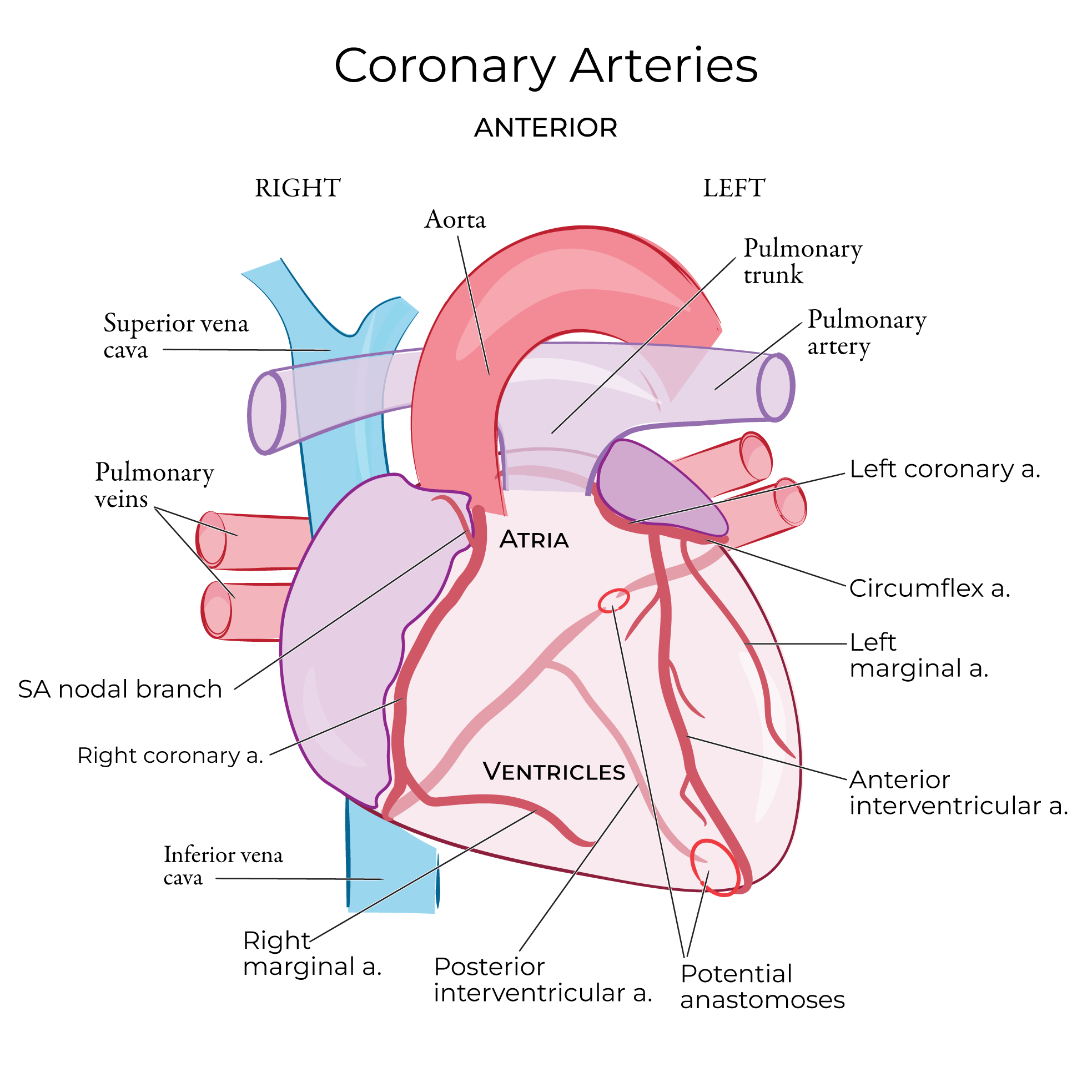
- Coronary arteries supply the heart.
Arch
- Brachiocephalic trunk (bifurcates to form right common carotid and subclavian arteries)
- Left common carotid artery
- Left subclavian artery.
- These vessels deliver blood to the head, neck, upper extremities, and upper back.
Descending Thoracic (superior to diaphragm)
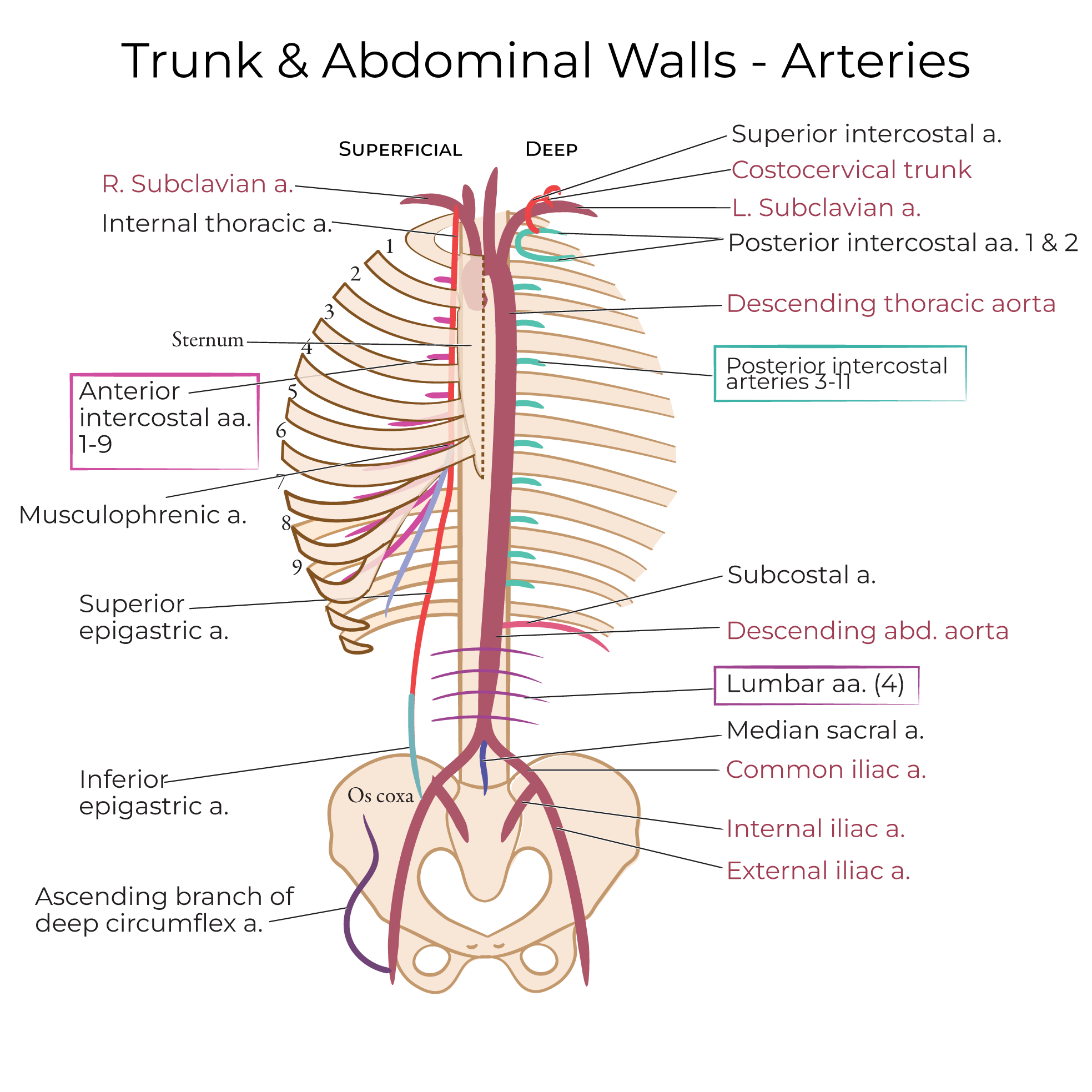
- Posterior intercostal arteries
Descending Abdominal (inferior to diaphragm)
- Celiac trunk, which typically has three main branches
- Superior mesenteric artery
- Right and left renal arteries
- Right and left gonadal arteries
- Inferior mesenteric artery.
- These vessels deliver blood to the tissues of the trunk (specifically, to organs of the digestive, urinary, and reproductive systems).
Bifurcation
- Gives rise to common iliac arteries (at approximately L4-L5)
- Common iliac arteries split to form external and internal iliac arteries, which supply the pelvis and lower extremities.
Clinical Correlations:
- Atherosclerotic plaque can form in the carotid arteries, which diminished blood flow to the brain. Small pieces of these clots can break free and ascend to the brain, where they completely occlude the small arteries of the brain. This deprives the brain of oxygen, which results in ischemic infarction (aka, stroke).
- Learn about Aortic aneurysm and dissection
