
Cardiomyopathies for USMLE Step 3
Start your One-Week Free Trial
Already subscribed? Log in »
Here are key facts for USMLE Step 2 & COMLEX-USA Level 3 from the Cardiomyopathies tutorial, as well as points of interest at the end of this document that are not directly addressed in this tutorial but should help you prepare for the boards. See the tutorial notes for further details and relevant links.

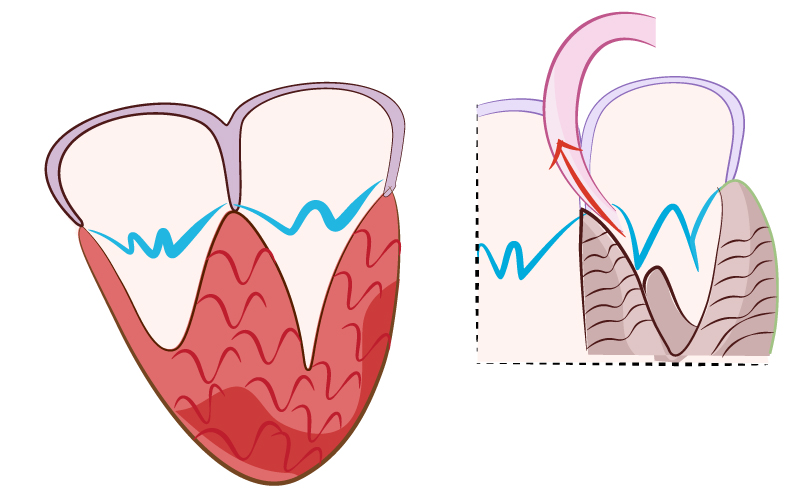 Below is information not explicitly contained within the tutorial but important for USMLE & COMLEX 3.
Vital for USMLE/COMLEX 3
Dilated Cardiomyopathy (DCM)
1. Management mirrors heart failure with reduced EF (HFrEF):
- Initiate ACE inhibitors or ARBs
- Add beta-blockers (carvedilol, bisoprolol, or metoprolol succinate)
- Use loop diuretics for volume overload
- Add spironolactone or eplerenone in patients with NYHA class II–IV symptoms
- Add SGLT2 inhibitors (e.g., dapagliflozin) for added mortality benefit

Hypertrophic Cardiomyopathy (HCM)
1. First-line treatment is beta-blockers to reduce myocardial oxygen demand and improve filling.
2. Verapamil is an alternative if beta-blockers are contraindicated.
3. Avoid vasodilators, diuretics, and nitrates, which reduce preload and worsen obstruction.
4. ICD placement is indicated for patients with:
- Family history of sudden cardiac death
- LV wall thickness >30 mm
- Unexplained syncope
- Non-sustained VT on Holter
- Abnormal blood pressure response to exercise
Restrictive Cardiomyopathy (RCM)
1. Treatment depends on the underlying cause:
- Amyloidosis: Tafamidis (for transthyretin type), chemotherapy (for AL type)
- Hemochromatosis: Phlebotomy or deferoxamine
- Sarcoidosis: Glucocorticoids for active inflammation
Arrhythmogenic Right Ventricular Cardiomyopathy (ARVC)
1. Treat with activity restriction, especially avoidance of competitive sports.
2. Use ICD for prevention of sudden cardiac death in patients with sustained VT or syncope.
3. Consider antiarrhythmic medications (e.g., sotalol, amiodarone) in symptomatic patients.
High Yield for USMLE/COMLEX 3
Dilated Cardiomyopathy (DCM)
1. Chagas cardiomyopathy should be suspected in Latin American immigrants with heart failure.
2. Alcohol-induced cardiomyopathy improves with cessation but may require full heart failure therapy.
3. Patients with doxorubicin-induced cardiomyopathy may benefit from early EF monitoring and dexrazoxane prophylaxis in high-risk cases.
4. Treat peripartum cardiomyopathy with standard heart failure meds (except ACE inhibitors if breastfeeding).
Hypertrophic Cardiomyopathy (HCM)
1. Regularly reassess risk factors for sudden cardiac death to determine ICD eligibility.
2. Monitor for progression to systolic dysfunction (burned-out HCM), which alters treatment approach.
3. Use Holter monitoring to assess for non-sustained VT or arrhythmias in symptomatic or high-risk patients.
Restrictive Cardiomyopathy (RCM)
1. Endomyocardial biopsy is indicated when diagnosis is unclear or for suspected infiltrative disease.
2. Amyloidosis may be suspected with symptoms of carpal tunnel, proteinuria, and unexplained heart failure.
3. If constrictive pericarditis is suspected, look for pericardial thickening, respiratory variation in mitral inflow, and calcification on imaging.
Arrhythmogenic Right Ventricular Cardiomyopathy (ARVC)
1. Family screening and genetic counseling are appropriate, especially for first-degree relatives.
2. Regular ECGs and imaging are used to monitor for progression and arrhythmias.
- --
Beyond the Tutorial
Dilated Cardiomyopathy
1. Cardiac MRI helps differentiate ischemic from non-ischemic cardiomyopathy and detect fibrosis.
2. SGLT2 inhibitors (e.g., dapagliflozin, empagliflozin) have shown mortality benefit even in non-diabetic HFrEF.
Hypertrophic Cardiomyopathy
1. Dual-chamber pacing may be considered in patients with HCM and bradyarrhythmias or as a second-line therapy in those who are poor candidates for surgery.
2. Genetic testing is encouraged for definitive diagnosis and family screening.
Restrictive Cardiomyopathy
1. Pulmonary hypertension may develop due to chronic elevated filling pressures and is associated with poor prognosis.
2. RCM often presents late; consider palliative approaches in advanced disease when transplant is not an option.
Cross-type Application
1. In patients with new-onset heart failure, always determine if the underlying cause is ischemic, valvular, or cardiomyopathic, as management paths differ.
2. Step 3 cases frequently involve patients with comorbidities (diabetes, CKD, cancer treatment history), requiring modification of standard algorithms.