
USMLE/COMLEX 3 - Medium & Variable Vessel Vasculitis
Start your One-Week Free Trial
Already subscribed? Log in »
Here are key facts for USMLE Step 3 & COMLEX-USA Level 3 from the Medium & Variable Size Vessel Vasculitis tutorial, as well as points of interest at the end of this document that are not directly addressed in this tutorial but should help you prepare for the boards. See the tutorial notes for further details and relevant links.
- --
VITAL FOR USMLE/COMLEX 3
Vasculitis: General Principles
1. Vasculitis is blood vessel inflammation leading to ischemia, necrosis, and organ dysfunction across multiple systems.
2. Systemic symptoms: fever, fatigue, weight loss, arthralgias, myalgias.
3. High-dose corticosteroids are first-line treatment for most vasculitides to prevent organ damage.
Polyarteritis Nodosa (PAN)
4. PAN involves medium-sized arteries, leading to multisystem ischemia.
5. Clinical manifestations:
- Mononeuritis multiplex (asymmetric neuropathy)
- Hypertension and renal ischemia (without glomerulonephritis)
- Abdominal pain, mesenteric ischemia
- Skin findings: livedo reticularis, ulcers, nodules, gangrene
- Angiography shows microaneurysms and segmental narrowing.
- Biopsy reveals transmural necrotizing inflammation.
- High-dose corticosteroids
- Antiviral therapy if hepatitis B is present
- Plasma exchange in some HBV-associated cases
Kawasaki Disease
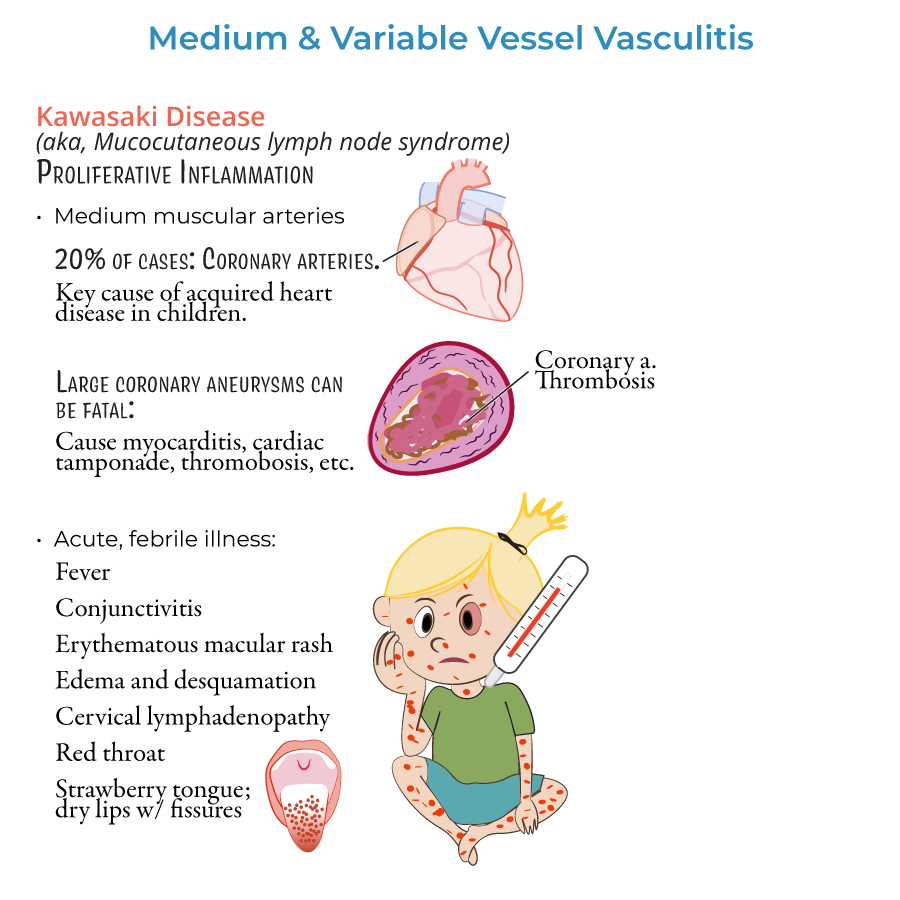
9. Kawasaki disease is a medium-vessel vasculitis in children under 5.
10. Diagnostic criteria:
- Fever ≥5 days + 4 of 5 features (conjunctivitis, rash, oral changes, extremity changes, cervical lymphadenopathy).
- IVIG and high-dose aspirin immediately.
- Baseline and follow-up echocardiograms at 2 and 6 weeks.
- --
HIGH YIELD
Behçet Disease
1. Vasculitis affecting vessels of all sizes.
2. Clinical features:
- Recurrent oral and genital ulcers
- Uveitis and ocular inflammation
- Skin lesions (erythema nodosum, papulopustular lesions)
- High-dose corticosteroids for severe flares.
- Colchicine or azathioprine for maintenance.
Buerger Disease (Thromboangiitis Obliterans)
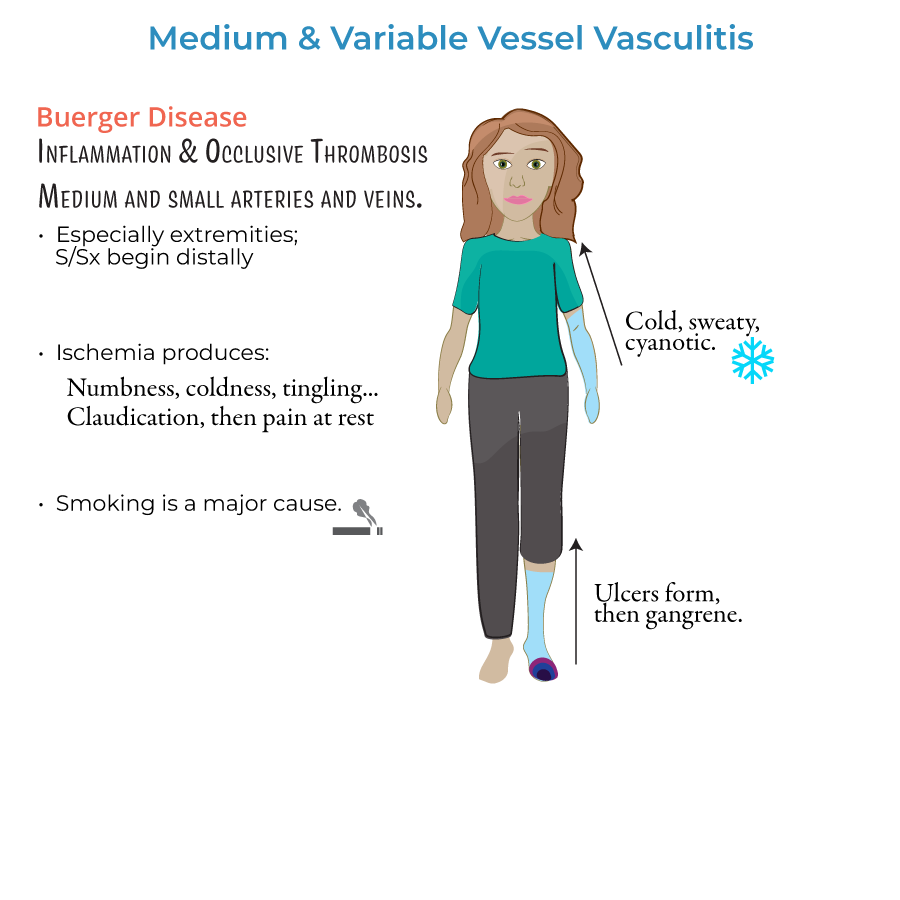
6. Affects small and medium arteries and veins, typically in young male smokers.
7. Symptoms:
- Distal extremity ischemia (coldness, tingling, claudication)
- Superficial thrombophlebitis
- Ulcers and gangrene
- Clinical suspicion plus arteriography showing corkscrew collaterals.
- Smoking cessation is mandatory; no other effective therapy.
- Avoid unnecessary anticoagulation unless a large-vessel thrombosis is detected.
- --
Beyond the Tutorial
PAN-Specific Management
1. Screen for hepatitis B and C routinely.
2. Cyclophosphamide can be added for severe PAN not associated with HBV.
3. Monitor renal function closely as PAN can cause progressive renal ischemia.
Kawasaki Disease Clinical Tips
4. Initiate treatment within 10 days of symptom onset for best outcomes.
5. Be cautious with live vaccines (MMR, varicella) for 11 months after IVIG therapy.
Behçet Disease Additional Considerations
6. Deep vein thrombosis (DVT) and arterial thrombosis can occur; monitor for thrombosis especially if symptoms like unilateral leg swelling appear.
7. Monitor for retinal vasculitis to prevent blindness.
Buerger Disease Special Points
8. May coexist with Raynaud phenomenon.
9. Surgical intervention (amputation) may be required if gangrene develops.
General Vasculitis Testing
10. ESR and CRP are nonspecific but useful for monitoring disease activity across all forms of vasculitis.
11. Regularly monitor for steroid complications (hyperglycemia, infections, osteoporosis) in chronic disease management.