
USMLE/COMLEX 2 - Thyroid Gland Pathophysiology
Start your One-Week Free Trial
Already subscribed? Log in »
Here are key facts for USMLE Step 2 & COMLEX-USA Level 2 from the Thyroid Gland Pathophysiology tutorial, as well as points of interest at the end of this document that are not directly addressed in this tutorial but should help you prepare for the boards. See the tutorial notes for further details and relevant links.
 Below is information not explicitly contained within the tutorial but important for USMLE & COMLEX 2.
- --
VITAL FOR USMLE/COMLEX 2
Clinical Presentation of Thyroid Disorders
1. Hyperthyroidism (thyrotoxicity): Characterized by elevated levels of T3 and T4, low LDL (due to increased LDL receptors in the liver), and, if in the case of primary hyperthyroidism, low levels of TSH due to negative feedback on the pituitary.
2. Hypothyroidism (myxedema): Characterized by low levels of T3 and T4, hypercholesterolemia, and, in the case of primary hypothyroidism, high TSH.
3. Goiter: An enlarged thyroid gland" that "can be benign or a sign of underlying thyroid disease.
4. Most common cause in US: Hyperthyroidism: in the US is Graves disease and Hypothyroidism: Hashimoto thyroiditis.
Key Diagnostic Findings
1. Primary hyperthyroidism: Elevated T3/T4 with suppressed TSH.
2. Primary hypothyroidism: Low T3/T4 with elevated TSH.
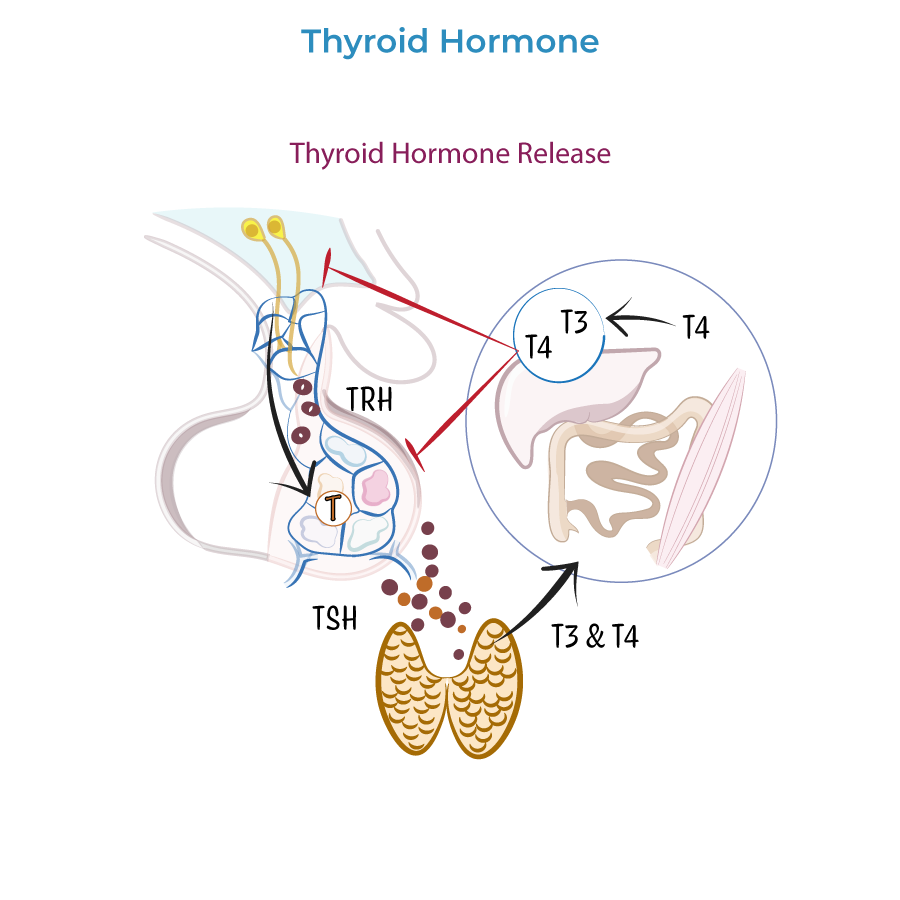
3. Negative feedback: Via negative feedback at the hypothalamus and the anterior pituitary gland, thyroid hormones inhibit further secretion of TRH and TSH.
Critical Clinical Manifestations
1. Cardiovascular: Hyperthyroidism: tachycardia with palpitations. Patients experience dyspnea and chest pain and have systolic hypertension." vs. "Hypothyroidism: bradycardia with reduced cardiac output.
2. Neuropsychiatric: Hyperthyroidism: hyperactivity, restlessness, anxiety, and insomnia. Patient have increased reflexes and fine motor tremors." vs. "Hypothyroidism has the opposite effects: patients are hypoactive, fatigued, and experience weakness and depressed mood with slow reflexes.
3. Ocular: Hyperthyroidism is also associated with exophthalmos, aka, proptosis, which is characterized by 'bulging' eyeballs due to inflammation around the eyes. Lid retraction can also occur in hyperthyroidism due to increased sympathetic stimulation of the muscles of the eyelid.
4. Metabolic: Hyperthyroidism: heat intolerance with increased sweating; patients have elevated basal metabolic rate with weight loss. vs. Hypothyroidism: cold intolerance and reduced sweating; patients have lower basal metabolic rates with weight gain, and possibly hyponatremia.
- --
HIGH YIELD
System-Specific Clinical Manifestations
Cardiovascular and Respiratory
1. Hyperthyroidism: tachycardia with palpitations. Patients experience dyspnea and chest pain and have systolic hypertension.
2. Hypothyroidism: bradycardia with reduced cardiac output. Patients experience dyspnea on exertion and are at risk for hypoventilation.
Neuropsychiatric
1. Hyperthyroidism: hyperactivity, restlessness, anxiety, and insomnia. Patient have increased reflexes and fine motor tremors.
2. Hypothyroidism has the opposite effects: patients are hypoactive, fatigued, and experience weakness and depressed mood with slow reflexes.
Musculoskeletal
1. Hyperthyroidism: breaks down proteins and muscles, producing proximal weakness with normal levels of creatine kinase and accelerates bone growth and tissue turnover; thus, patients are at risk for osteoporosis and bone fractures.
2. Hypothyroidism also produces proximal weakness, but with myalgia; creatine kinase levels are often elevated. In children, it "produces impaired bone formation and growth.
Gastrointestinal
1. Hyperthyroidism: more bowel movements, possibly with diarrhea, and appetite is increased.
2. Hypothyroidism: constipation and reduced appetite.
Dermatologic
1. Hyperthyroidism: vasodilation produces warm, moist skin; hair is often fine (thin diameter).
2. Hypothyroidism: patients have reduced blood flow with cool, dry skin. Hair is often coarse and brittle, and patients may have alopecia. Nails are brittle. Hypothyroidism is often characterized by nonpitting edema and puffy facies, due to water retention – thus its alternative name, myxedema.
Reproductive
1. Hyperthyroidism: irregular or reduced menstrual flow, gynecomastia, lower libido, and possibly reduced fertility.
2. Hypothyroidism: similar effects, but gynecomastia is not common.
Ocular
1. Both hyper- and hypothyroidism: can produce periorbital edema.
2. Hyperthyroidism is also associated with exophthalmos, aka, proptosis, which is characterized by 'bulging' eyeballs due to inflammation around the eyes. Lid retraction can also occur in hyperthyroidism due to increased sympathetic stimulation of the muscles of the eyelid.
- --
Beyond the Tutorial
Clinical Management
1. Hyperthyroidism treatment: Anti-thyroid medications (methimazole, PTU), radioactive iodine ablation, surgery.
2. Hypothyroidism treatment: Levothyroxine replacement with dosing based on weight and adjusted by TSH levels.
3. Special populations: Management modifications in pregnancy, elderly, and cardiac patients.
Thyroid Emergencies
1. Thyroid storm: Life-threatening hyperthyroidism requiring aggressive management.
2. Myxedema coma: Severe hypothyroidism with altered mental status, hypothermia, and risk of respiratory depression.
3. Post-thyroidectomy hypocalcemia: Due to incidental parathyroid damage.
Diagnostic Approach
1. Laboratory sequence: TSH first, then free T4/T3; antibody testing when autoimmune etiology suspected.
2. Imaging: Ultrasound, nuclear medicine studies for functional assessment.
3. Fine needle aspiration: Indicated for thyroid nodules meeting specific size and risk criteria.