
USMLE/COMLEX 2 - H. pylori Infection
Start your One-Week Free Trial
Already subscribed? Log in »
Here are key facts for USMLE Step 2 & COMLEX-USA Level 2 from the Helicobacter pylori tutorial, as well as points of interest at the end of this document that are not directly addressed in this tutorial but should help you prepare for the boards.
 Below is information not explicitly contained within the tutorial but important for USMLE & COMLEX-USA Level 2.
- --
VITAL FOR USMLE/COMLEX 2
Clinical Manifestations of H. pylori Infection
1. Gastritis: Inflammation of the stomach lining with infiltration of neutrophils and mononuclear cells.
2. Some individuals are asymptomatic, while others experience an acute phase of nausea, bloating, and vomiting.
3. Peptic ulcers develop in 10-20% of patients with gastritis, occurring in either stomach or duodenum.
4. Gastric adenocarcinoma develops in approximately 1-2% of chronic infections.
5. MALT lymphomas form when monoclonal B cells proliferate in gastric lymphoid tissue.
Infection Patterns and Clinical Significance
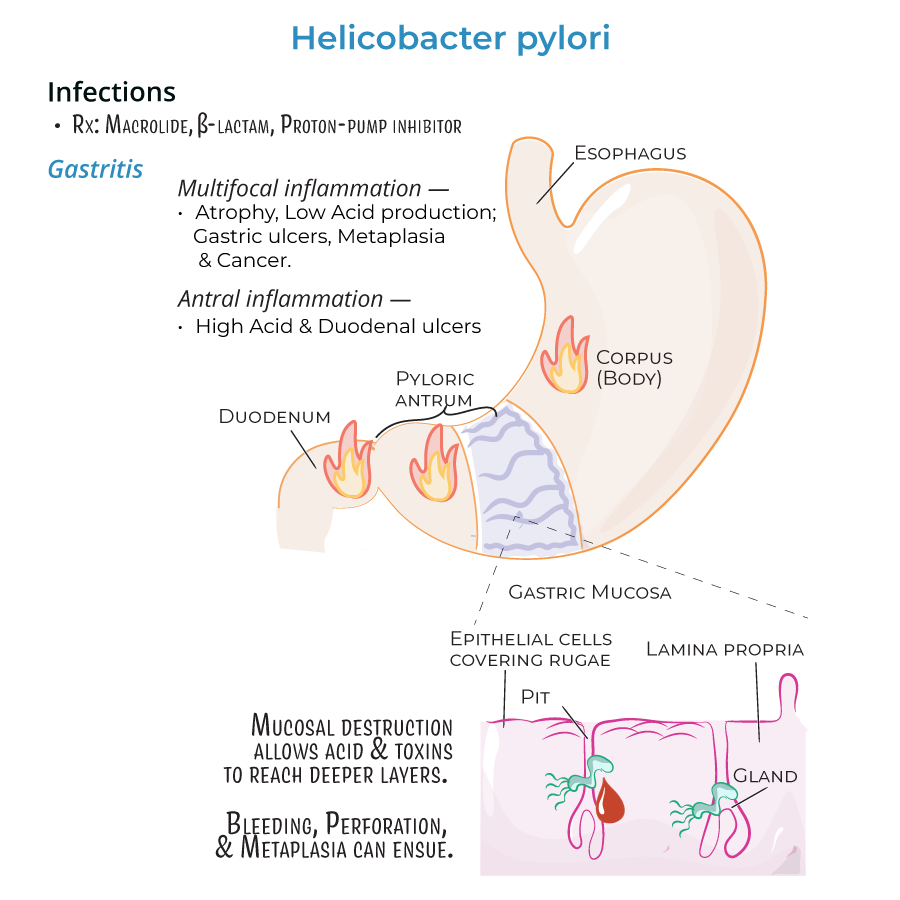
1. Localized gastritis (usually in pyloric antrum) is associated with increased acid production and duodenal ulcers.
2. Pangastritis (multifocal inflammation) is associated with atrophy, reduced acid production, and higher risk of gastric cancer.
3. Severe ulceration can lead to bleeding, perforation, and metaplasia.
Diagnostic Considerations
1. H. pylori is catalase, oxidase, and urease positive - important for diagnostic testing.
2. Life-long colonization means infection typically occurs during childhood but produces symptoms during adulthood.
Treatment Approach
1. Standard therapy includes macrolides, beta-lactams, and proton-pump inhibitors.
2. Treatment is important because chronic gastritis can lead to severe consequences.
- --
HIGH YIELD
Detailed Clinical Presentations
1. H. pylori gastritis can be localized to one area (usually the pyloric antrum) or widespread.
2. Ulcers occur when inflammation erodes the stomach tissues, affecting either the stomach or duodenum.
3. Gastric adenocarcinoma develops when chronic inflammation leads to metaplasia, with gastric mucosa replaced by fibrotic tissue.
4. In MALT lymphoma, lymphoid tissues infiltrate the stomach in response to infection, with monoclonal B-cell proliferation.
Pathophysiological Mechanisms of Disease
1. Infection triggers host production of IL-8, recruiting neutrophils that release harmful molecules damaging host tissues.
2. H. pylori destroys the mucosa, allowing acids and toxins access to deeper tissues.
3. Reduced gastric acid secretion is associated with higher risk of adenocarcinoma.
4. T-helper 1 cells are implicated in the inflammatory response to H. pylori.
Risk Factors for Severe Disease
1. Presence of virulence factors like CagA promotes proliferation and morphological changes in host tissues.
2. VacA toxin promotes pore formation, disrupts cell signaling, and induces host cell death.
3. Chronic inflammation with persistent neutrophil infiltration increases tissue damage.
Special Considerations
1. Enterohepatic helicobacters (H. cinaedi and H. fennelliae) can cause gastroenteritis and bacteremia, particularly in immunocompromised individuals.
2. These related species invade the intestines and liver rather than the stomach.
- --
Beyond the Tutorial
Advanced Diagnostic Approaches
1. Test and treat strategy for younger patients with dyspepsia without alarm symptoms.
2. Endoscopy with biopsy for patients with alarm symptoms or older than 55.
3. Post-treatment testing recommended to confirm eradication.
4. Consideration of antimicrobial resistance testing for treatment failures.
Current Treatment Guidelines
1. First-line therapy: Clarithromycin-based triple therapy in regions with low resistance.
2. Alternative regimens: Bismuth quadruple therapy, concomitant therapy, sequential therapy.
3. Salvage therapy: Levofloxacin-based triple therapy after initial treatment failure.
4. 14-day treatment duration generally preferred over 7-10 days.
Management of Complications
1. Endoscopic intervention for bleeding ulcers.
2. Surgical management for perforated ulcers.
3. Endoscopic surveillance for patients with precancerous lesions.
4. H. pylori eradication leads to regression of most MALT lymphomas.
Special Population Considerations
1. Testing and treatment before long-term NSAID or aspirin therapy.
2. Management in patients with unexplained iron deficiency anemia.
3. Testing recommended for first-degree relatives of patients with gastric cancer.
4. Consideration of H. pylori status in patients with immune thrombocytopenia.