
USMLE/COMLEX 1 - Medium & Variable Vessel Vasculitis
Start your One-Week Free Trial
Already subscribed? Log in »
Here are key facts for USMLE Step 1 & COMLEX-USA Level 1 from the Medium & Variable Size Vessel Vasculitis tutorial, as well as points of interest at the end of this document that are not directly addressed in this tutorial but should help you prepare for the boards. See the tutorial notes for further details and relevant links.
- --
VITAL FOR USMLE/COMLEX 1
General Concepts of Vasculitis
1. Vasculitis is characterized by inflammation of blood vessels, leading to necrosis, ischemia, and organ damage.
2. Common systemic symptoms of vasculitis include fever, weight loss, fatigue, arthralgias, and myalgias.
3. Corticosteroids and immunosuppressants are the main treatments for most vasculitides.
Polyarteritis Nodosa (PAN)
4. PAN affects medium-sized muscular arteries, especially at branch points.
5. PAN causes necrotizing inflammation leading to ischemia and multisystem involvement:
- Peripheral nervous system: mononeuritis multiplex (asymmetric neuropathies affecting median, ulnar, fibular nerves)
- Renal system: hypertension, renal insufficiency (without glomerulonephritis)
- GI tract: mesenteric ischemia, pain, malabsorption, aneurysms
- Skin: livedo reticularis, ulcers, nodules, gangrene
- Heart: coronary artery disease leading to heart failure
Kawasaki Disease
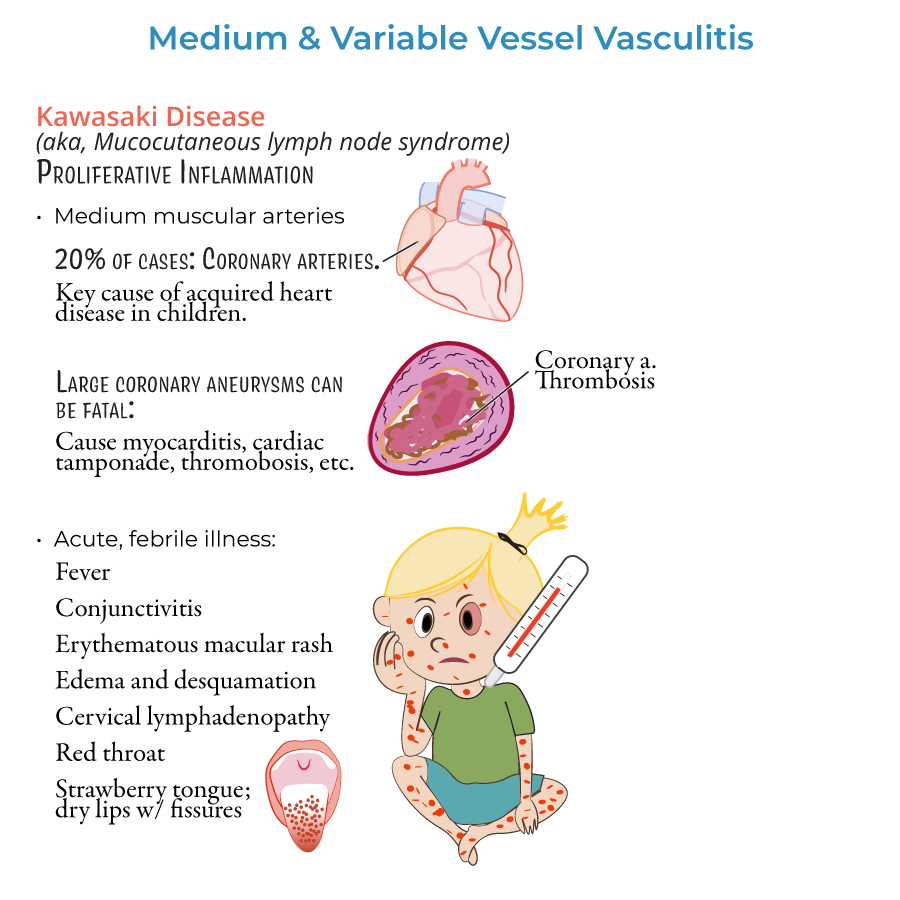
8. Kawasaki disease is a medium vessel vasculitis primarily affecting children under 5 years.
9. It is a major cause of acquired heart disease in children due to risk of coronary artery aneurysms.
10. Diagnostic features include:
- Fever lasting at least 5 days
- Bilateral non-exudative conjunctivitis
- Oral mucosal changes (strawberry tongue, fissured lips)
- Polymorphous rash
- Peripheral extremity changes (edema, erythema, desquamation)
- Cervical lymphadenopathy
- --
HIGH YIELD
Behçet Disease
1. Behçet disease is a vasculitis of all vessel sizes characterized by recurrent oral and genital ulcers, uveitis, and skin lesions (erythema nodosum, papulopustular lesions).
2. Hypopyon (layering of pus in anterior chamber of the eye) may be present.
3. Disease is more severe in men, and typically presents around age 20.
Buerger Disease (Thromboangiitis Obliterans)
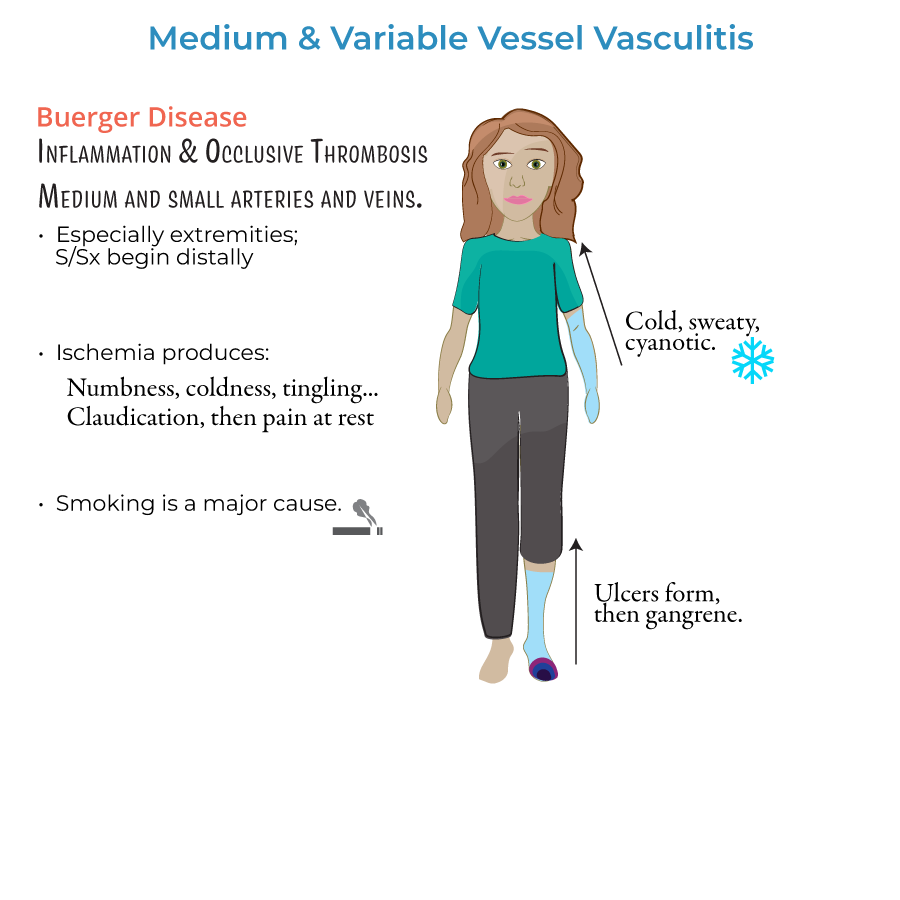
4. Buerger disease is a small and medium vessel vasculitis strongly associated with smoking.
5. Involves distal extremities (hands and feet) and causes:
- Claudication (pain with exercise)
- Rest pain
- Cold sensitivity
- Cyanosis
- Ulceration leading to gangrene
Pathophysiology and Histological Themes
9. In general, vasculitides cause tissue ischemia through inflammation, thrombosis, and direct vessel damage.
10. Medium-vessel vasculitis typically targets muscular arteries and presents with end-organ ischemia rather than glomerulonephritis (seen in small vessel vasculitis).
- --
Beyond the Tutorial
Polyarteritis Nodosa Key Clarifications
1. PAN spares the pulmonary arteries, distinguishing it from other vasculitides like GPA (granulomatosis with polyangiitis).
2. ANCA negative: PAN is typically negative for anti-neutrophil cytoplasmic antibodies (ANCA).
Kawasaki Disease Clinical Nuances
3. Coronary aneurysms are the most feared complication; all patients require echocardiographic monitoring.
4. Beau’s lines (transverse grooves in fingernails) may occur during recovery.
5. Risk of thrombosis or myocardial infarction exists if aneurysms develop.
Behçet Disease Associations
6. Often associated with HLA-B51 genetic marker.
7. Pathergy test (development of papule at site of needle stick) may be positive.
Buerger Disease Considerations
8. Often found in young male smokers under age 45.
9. Can coexist with Raynaud phenomenon due to distal vessel sensitivity.