
USMLE/COMLEX 1 - Ischemic Heart Disease Symptoms and Treatments
Start your One-Week Free Trial
Already subscribed? Log in »
Here are key facts for USMLE Step 1 & COMLEX-USA Level 1 from the Ischemic Heart Disease Symptoms and Treatments tutorial, as well as points of interest at the end that are not directly addressed in this tutorial but should help you prepare for the boards. See the tutorial notes for further details and relevant links.
 Below is information not explicitly contained within the tutorial but important for USMLE & COMLEX 1.
VITAL FOR USMLE/COMLEX 1
Ischemic Heart Disease Basics
1. Angina pectoris is the hallmark of ischemic heart disease, characterized by pain or discomfort in the chest, which often radiates through the upper extremities, face, and other areas of the body.
2. Stable angina is characterized by predictable triggers, duration, and frequency; resolves with rest and/or nitrates.
3. Unstable angina is unpredictable, a medical emergency, and can lead to myocardial infarction.
4. Non-ischemic causes of angina include aortic stenosis, anemia, arrhythmias, and hypertrophic cardiomyopathy.
5. Silent ischemia refers to asymptomatic ischemic heart disease; associated with increased morbidity and mortality.
Angina Types
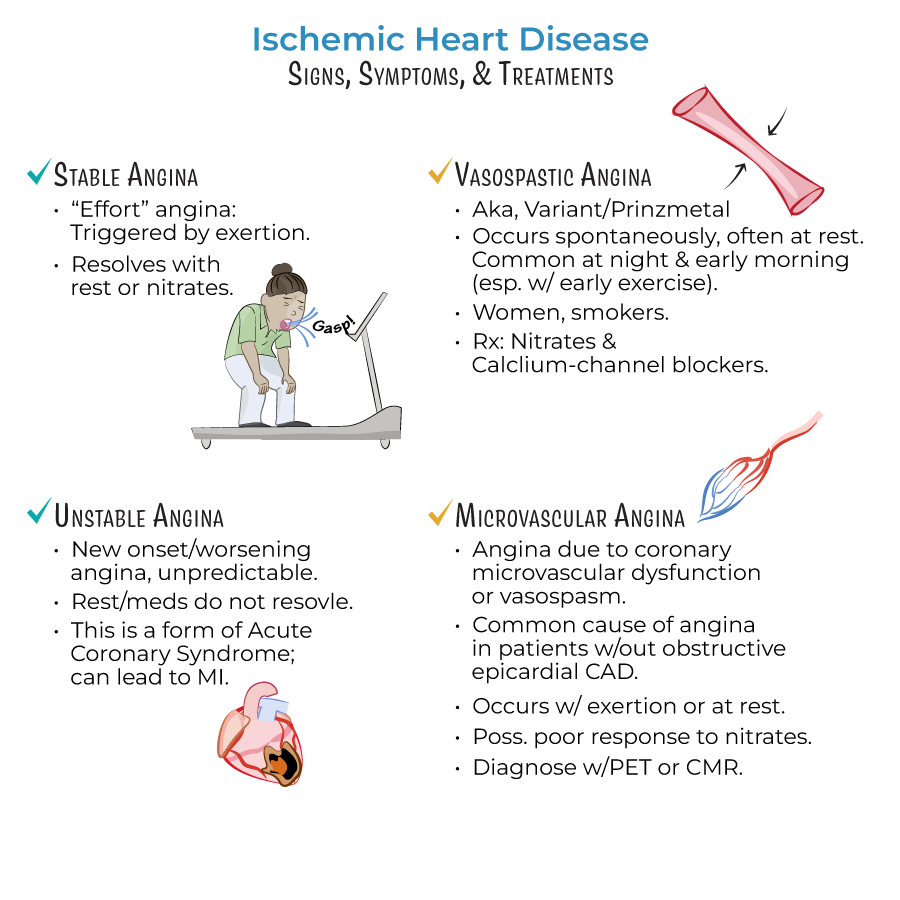
1. Stable angina (effort angina): triggered by physical or mental exertion, resolves with rest and/or nitrates.
2. Unstable angina: new onset or worsening angina, unpredictable, occurs spontaneously, does not resolve with rest or medications.
3. Vasospastic angina (variant/Prinzmetal): occurs when vasospasm contracts vessels, occurs spontaneously and often at rest, typically at night or early morning.
4. Microvascular angina: result of coronary microvascular dysfunction, accounts for chest pain in up to half of patients without obstructive coronary artery disease.
- --
HIGH YIELD
Symptoms of Ischemic Heart Disease
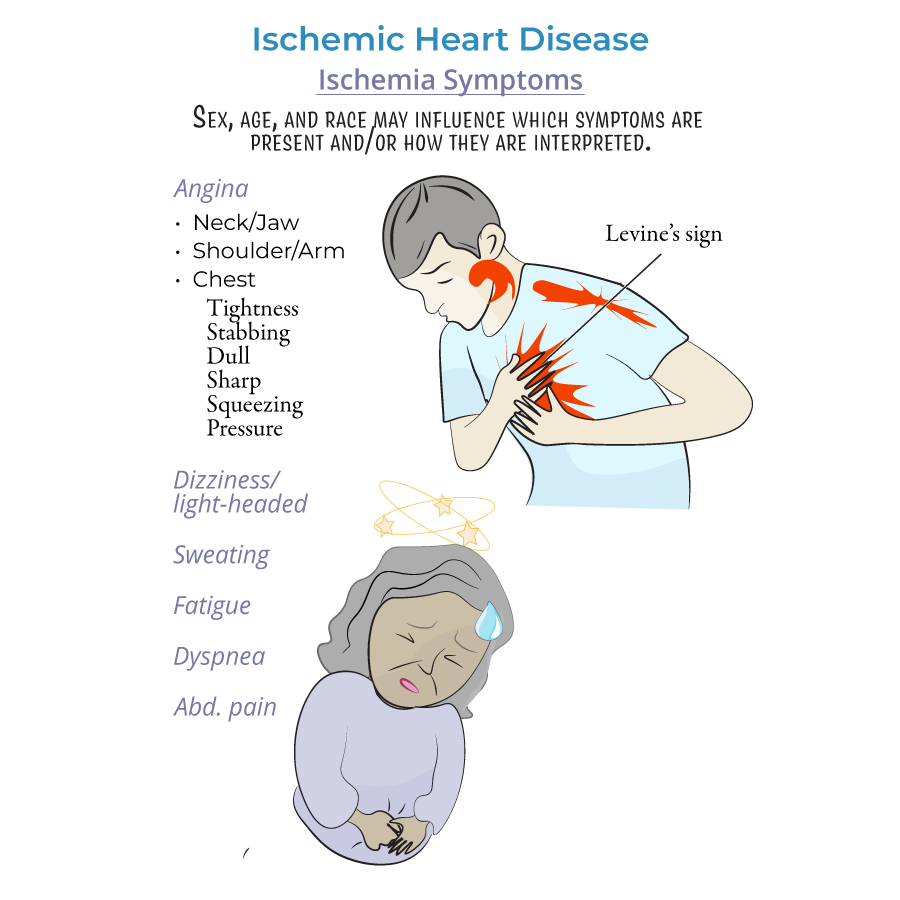
1. Angina presents as chest discomfort variably described as: tightness, dull, sharp, or stabbing pain, squeezing, or pressure on the heart.
2. Levine's sign (clenched fist held over sternum) is a gesture many patients use to describe chest discomfort.
3. Radiating pain to shoulders, arms, neck, and jaw is commonly reported.
4. Sex, age, and race influence which symptoms present and how they're interpreted.
5. Patients of African descent often experience gastrointestinal discomfort that may be misinterpreted as indigestion.
6. Women with ischemic heart disease frequently experience light-headedness, dizziness, and persistent fatigue.
7. Other common symptoms include dyspnea and excessive sweating.
Treatments
1. Life-style modifications such as smoking cessation and heart-healthy diet are generally recommended.
2. Nitroglycerin dilates vessels and prevents spasms; can be taken as prophylaxis or during an angina episode.
3. Beta-blockers slow heart rate (reducing myocardial oxygen demands).
4. Calcium channel blockers promote vessel dilation.
5. Sodium channel inhibitors (Ranolazine) increase myocardial relaxation.
6. ACE-inhibitors promote vessel dilation.
7. Statins reduce hyperlipidemia, vessel inflammation, and endothelial dysfunction.
8. Daily aspirin may be prescribed, but benefits must be weighed against risk of bleeding.
9. Percutaneous coronary intervention (angioplasty) uses a catheter with balloon to widen obstructed vessels.
10. Coronary artery bypass grafting (CABG) involves grafting another vessel to bypass an obstruction.
11. Refractory angina refers to ischemia with angina that persists despite medical intervention.
- --
Beyond the Tutorial
Diagnostic Workup
1. Cardiac troponins are the preferred biomarkers for myocardial injury detection.
2. 12-lead ECG should be obtained within 10 minutes of presentation with suspected ACS.
3. Stress testing can be exercise-based or pharmacologic when exercise is contraindicated.
4. Coronary CT angiography is useful for excluding CAD in low-to-intermediate risk patients.
Pathophysiology & Risk Factors
1. Coronary artery disease is primarily caused by atherosclerosis with plaque rupture.
2. Modifiable risk factors include smoking, hypertension, diabetes, dyslipidemia, obesity, and sedentary lifestyle.
3. STEMI vs. NSTEMI differentiation is crucial for determining reperfusion strategy.
4. Door-to-balloon time of <90 minutes is the goal for primary PCI in STEMI patients.