
USMLE/COMLEX 1 - Cardiomyopathies
Start your One-Week Free Trial
Already subscribed? Log in »
Here are key facts for USMLE Step 1 & COMLEX-USA Level 1 from the Cardiomyopathies tutorial, as well as points of interest at the end of this document that are not directly addressed in this tutorial but should help you prepare for the boards. See the tutorial notes for further details and relevant links.

 Below is information not explicitly contained within the tutorial but important for USMLE & COMLEX 1.
- --
VITAL FOR USMLE/COMLEX 1
Dilated Cardiomyopathy (DCM)
1. Systolic dysfunction with reduced ejection fraction (EF < 45%).
2. Eccentric hypertrophy: dilated, thin-walled, and heavy ventricles.
3. Common causes: alcohol, doxorubicin, Coxsackievirus B, Chagas disease, peripartum, and genetic mutations.
4. Histology: myocyte hypertrophy, interstitial fibrosis, loss of myofibrils.
5. Complications: mural thrombi and mitral regurgitation.

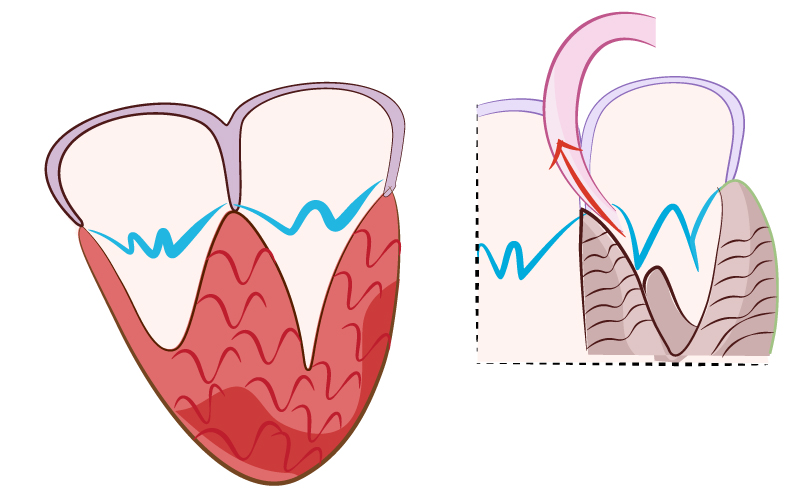
Hypertrophic Cardiomyopathy (HCM, including HOCM)
1. Diastolic dysfunction with preserved or increased EF.
2. Asymmetric septal hypertrophy, especially in HOCM.
3. Histology: myofiber disarray with interstitial fibrosis (highly tested).
4. Genetic basis: autosomal dominant mutations in sarcomeric proteins (e.g., beta-myosin heavy chain, myosin-binding protein C).
5. Associated with sudden cardiac death in young athletes.
6. Characteristic murmur increases with Valsalva (due to decreased preload).
7. Often presents with a fourth heart sound (S4) due to stiff ventricle.
Restrictive Cardiomyopathy (RCM)
1. Diastolic dysfunction with preserved ejection fraction.
2. Characterized by rigid, noncompliant ventricles.
3. Common causes: amyloidosis, sarcoidosis, hemochromatosis, and radiation fibrosis.
4. Grossly: normal or slightly thickened walls; no chamber dilation.
5. May mimic constrictive pericarditis (for differential diagnosis questions).
Arrhythmogenic Right Ventricular Cardiomyopathy (ARVC)
1. Genetic disorder causing fibrofatty replacement of right ventricular myocardium.
2. Mutation in desmosomal proteins.
3. Risk of ventricular arrhythmias, especially during exertion.
General Diagnostic Principle
1. Echocardiography is the most commonly tested imaging tool to differentiate cardiomyopathies.
- --
HIGH YIELD
Dilated Cardiomyopathy (DCM)
1. Coxsackievirus B is the prototypical infectious cause of DCM.
2. Peripartum cardiomyopathy is a testable cause of reversible DCM.
3. Iron overload (hemochromatosis) can lead to DCM-like or RCM-like patterns.
4. Presents histologically with eccentric hypertrophy (increased chamber size, wall thinning).
5. Seen in Duchenne and Becker muscular dystrophies due to dystrophin mutations.
Hypertrophic Cardiomyopathy (HCM)
1. Can present asymptomatically or with dyspnea, syncope, or chest pain on exertion.
2. Murmur worsens with Valsalva or standing, and improves with squatting or hand grip.
3. ECG may show abnormal P waves, deep Q waves, and signs of LVH.
4. Myocyte disarray is considered pathognomonic for HCM.
5. Autosomal dominant inheritance makes family history a commonly tested clue.
Restrictive Cardiomyopathy (RCM)
1. Associated with congo red stain positivity in amyloidosis (apple-green birefringence under polarized light).
2. Can be caused by Loeffler endocarditis (eosinophilic infiltration with fibrosis).
3. Diastolic dysfunction with normal EF is the key hemodynamic hallmark.
4. Biatrial enlargement is often present.
Arrhythmogenic Right Ventricular Cardiomyopathy (ARVC)
1. Presents with exercise-induced arrhythmias and sudden cardiac death in young adults.
2. Epsilon waves on ECG may be seen (less frequently tested but distinctive).
Cross-Type Concepts
1. Diastolic dysfunction is a shared feature of HCM and RCM, not DCM.
2. Know the differentiating features:
- DCM = systolic dysfunction, eccentric hypertrophy
- HCM = diastolic dysfunction, asymmetric septal hypertrophy
- RCM = diastolic dysfunction, rigid non-dilated ventricles
- --
Beyond the Tutorial
Dilated Cardiomyopathy
1. Takotsubo cardiomyopathy (stress-induced, reversible): mimics MI but has normal coronary arteries.
2. Seen with glycogen storage diseases like Pompe (lysosomal acid alpha-glucosidase deficiency).
3. LV noncompaction cardiomyopathy: trabeculated myocardium, rare but testable as a cause of systolic failure.
Hypertrophic Cardiomyopathy
1. Must be distinguished from athlete's heart, which is symmetric and regresses with detraining.
2. Sudden death in athletes often due to ventricular fibrillation.
Restrictive Cardiomyopathy
1. Endomyocardial biopsy may be needed to differentiate from constrictive pericarditis.
2. Fabry disease and Danon disease may present with restrictive or hypertrophic features.