
Asthma for PA
Start your One-Week Free Trial
Already subscribed? Log in »
Asthma for the Physician Assistant Licensing Exam
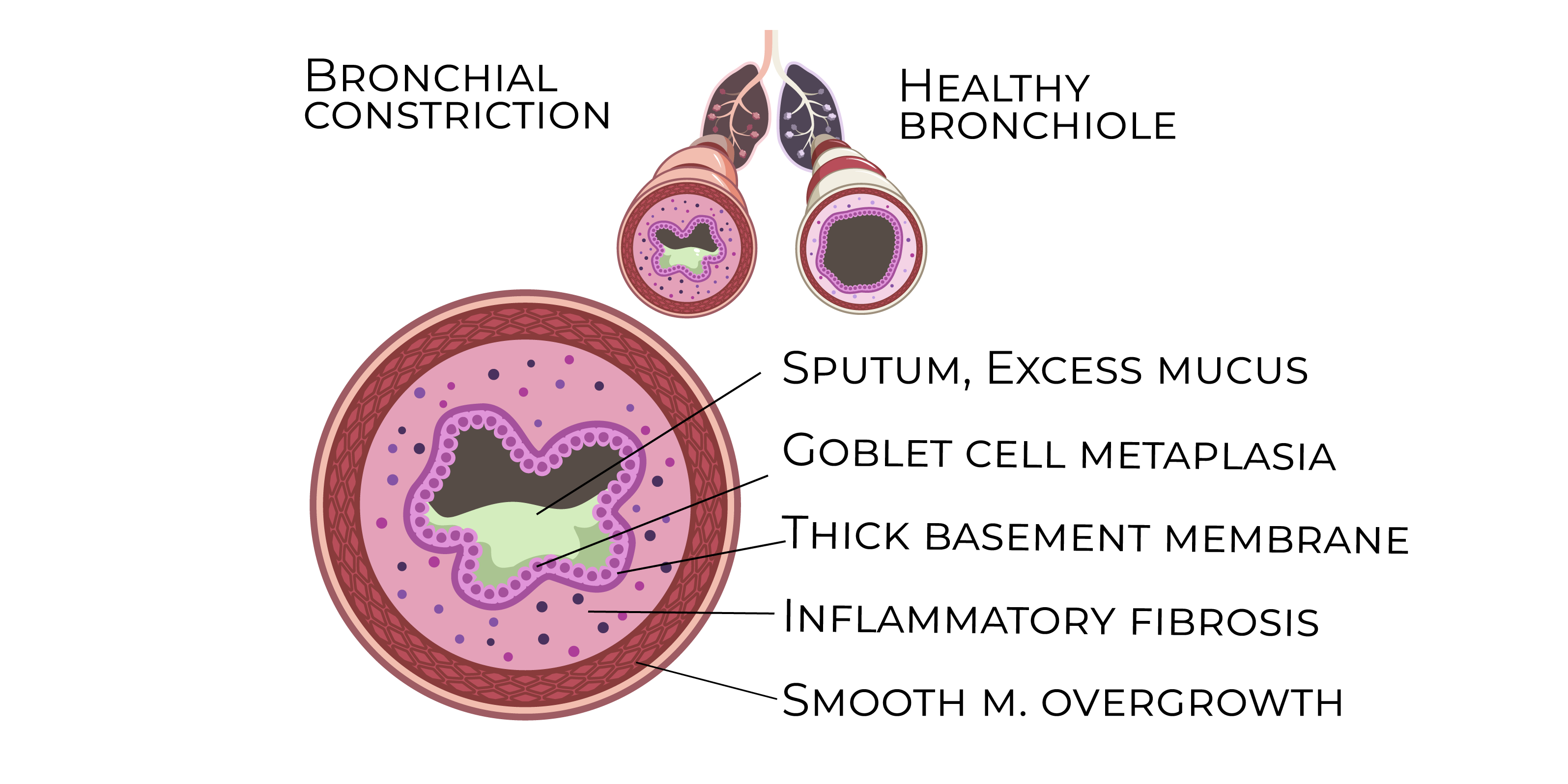
Pathophysiology
- Chronic Inflammation:
- Asthma is characterized by chronic inflammation of the airways, involving immune cells like eosinophils and mast cells. Inflammatory mediators, such as histamine and leukotrienes, cause bronchoconstriction, increased mucus production, and airway edema.
- Airway Hyperresponsiveness:
- The airways in asthma patients are hypersensitive to various triggers (e.g., allergens, cold air, exercise), leading to bronchoconstriction and airflow obstruction.
- Airway Remodeling:
- Chronic inflammation can cause structural changes, such as smooth muscle hypertrophy and fibrosis, which may lead to irreversible airway narrowing in severe cases.
Risk Factors
- Genetics and Atopy:
- Family history of asthma, allergic rhinitis, or eczema increases the risk. Atopy, the predisposition to develop IgE-mediated allergic reactions, is a key risk factor.
- Environmental Triggers:
- Common triggers include allergens (dust mites, pollen, pet dander), tobacco smoke, air pollution, and viral infections.
Clinical Features
- Wheezing:
- Expiratory wheezing is a hallmark of asthma, often worsened by exposure to triggers.
- Dyspnea and Chest Tightness:
- Shortness of breath and a sensation of chest tightness occur, especially during exacerbations or at night.
- Cough:
- A persistent, nonproductive cough, especially at night, is common.
Diagnosis
- Spirometry:
- Key diagnostic tool showing reversible airflow obstruction (FEV1 increases by at least 12% after bronchodilator use).
- Peak Expiratory Flow (PEF):
- PEF monitoring helps assess asthma control and detect worsening symptoms.
Management
- Intermittent Asthma:
- Short-acting beta-agonists (SABAs): Used as needed for symptom relief (e.g., albuterol).
- Persistent Asthma:
- Inhaled corticosteroids (ICS) are the cornerstone of treatment for long-term control, combined with long-acting beta-agonists (LABAs) for more severe cases.
- Exacerbations:
- Treated with SABAs, systemic corticosteroids (e.g., prednisone), and oxygen if needed.
Key Points
- Asthma is a chronic inflammatory disorder of the airways, characterized by reversible airway obstruction and hyperresponsiveness to triggers.
- Diagnosis is confirmed by spirometry, demonstrating reversible airflow obstruction (FEV1 increase after bronchodilator use).
- Treatment is based on a stepwise approach, with SABAs for intermittent symptoms and ICS as the first-line maintenance therapy for persistent asthma.
- Exacerbations are managed with SABAs and systemic corticosteroids, with oxygen provided in severe cases.