
NCLEX Focus - Hypertension
Start your One-Week Free Trial
Already subscribed? Log in »
The following are high yield points from the Hypertension Overview tutorial to help you prepare for the NCLEX.
Review this Hypertension flashcard for further details.
 A 45-year-old patient has a blood pressure reading of 134/78 mmHg. How should the nurse classify this patient's blood pressure according to the 2017 ACC/AHA guidelines?
Which of the following best characterizes primary hypertension?
A patient’s blood pressure is consistently elevated in the clinic but normal at home. What is the term for this phenomenon?
Which patient is at highest risk for developing salt-sensitive hypertension?
A 45-year-old patient has a blood pressure reading of 134/78 mmHg. How should the nurse classify this patient's blood pressure according to the 2017 ACC/AHA guidelines?
Which of the following best characterizes primary hypertension?
A patient’s blood pressure is consistently elevated in the clinic but normal at home. What is the term for this phenomenon?
Which patient is at highest risk for developing salt-sensitive hypertension?
NCLEX Focus
Definitions and Blood Pressure Basics
- Hypertension is defined as persistently elevated blood pressure.
- Affects approximately 46 percent of Americans aged 20 and older.
- Known as the "silent killer" due to lack of early symptoms.
- Increases risk for cardiovascular disease, stroke, and kidney disease.
Blood Pressure Measurement
- Systolic pressure: Peak pressure after left ventricular contraction (normal around 120 mmHg).
- Diastolic pressure: Lowest pressure during ventricular relaxation (normal around 80 mmHg).
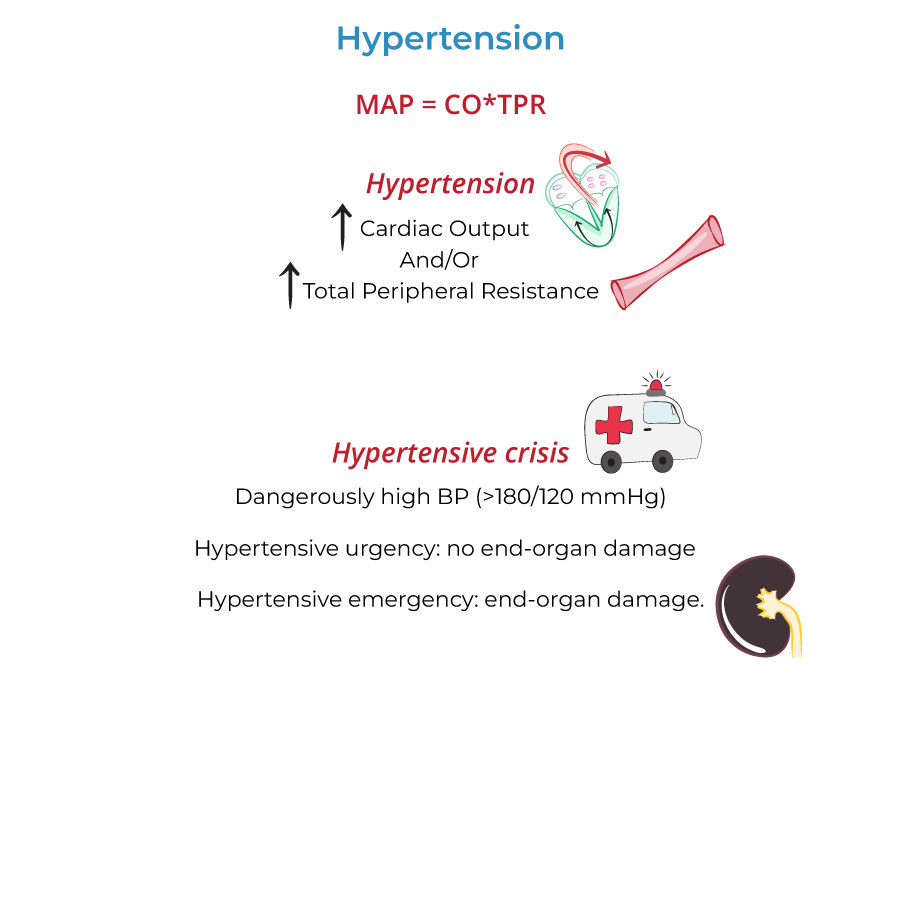
- Mean arterial pressure (MAP): Reflects average pressure; influenced by cardiac output and total peripheral resistance.
2017 ACC/AHA Hypertension Classification
- Normal: Systolic < 120 mmHg AND diastolic < 80 mmHg
- Elevated: Systolic 120–129 mmHg AND diastolic < 80 mmHg
- Stage 1 Hypertension: Systolic 130–139 mmHg OR diastolic 80–89 mmHg
- Stage 2 Hypertension: Systolic ≥ 140 mmHg OR diastolic ≥ 90 mmHg
- Classification is based on the higher value when systolic and diastolic fall in different categories.
Variability in Blood Pressure Readings
- Blood pressure fluctuates throughout the day and in different settings.
- White coat hypertension: Elevated BP in clinical setting only (untreated patient).
- White coat effect: Same phenomenon in patients under treatment.
- Masked hypertension: Normal BP in clinic but elevated outside (untreated).
- Masked uncontrolled hypertension: Same as above, but in treated patients.
- --
Primary Hypertension
- Accounts for 90 to 95 percent of adult hypertension cases.
- No single identifiable cause; arises from multifactorial interactions.
Contributing Factors
- Genetics and epigenetics: Family history plays a role.
- Obesity: May alter sympathetic and renal regulation.
- Sedentary lifestyle: Inactivity contributes to elevated blood pressure.
- Diet: High salt intake and low intake of calcium, potassium, and fiber can elevate BP.
- Salt sensitivity is particularly important in African Americans, older adults, and postmenopausal women.
- Substances: Alcohol, tobacco, and e-cigarette use are linked to hypertension.
- Chronic stress: Can activate the sympathetic nervous system and raise BP.
- Population differences: Highest prevalence seen in non-Hispanic African Americans, American Indians, and Native Alaskans.
- Age and sex:
- Hypertension increases with age.
- Premenopausal women generally have lower BP than men.
- Postmenopausal women may have BP equal to or higher than men.
- --
Secondary Hypertension
- Represents 5 to 10 percent of hypertension cases.
- Results from identifiable, treatable conditions.
Causes
- Renovascular hypertension: Caused by renal artery stenosis due to atherosclerosis or fibromuscular dysplasia.
- Primary aldosteronism: Excess aldosterone increases sodium retention and volume.
- Causes include aldosterone-producing adenomas and idiopathic hyperaldosteronism.
- Renal parenchymal disease: Damaged kidney tissue leads to poor volume regulation.
- Obstructive sleep apnea: Triggers sympathetic activation and BP elevation.
- Drugs: Caffeine, NSAIDs, hormonal contraceptives, decongestants, stimulants, some herbal products.
- Pregnancy: Can lead to gestational hypertension and pre-eclampsia.
- Other conditions:
- Pheochromocytoma
- Coarctation of the aorta (especially in children)
- Cushing syndrome
- Hyperparathyroidism
NCLEX Questions