
NCLEX - Bacterial Endocarditis
Start your One-Week Free Trial
Already subscribed? Log in »
Here are key facts for NCLEX RN & PN Examinations from the Bacterial Endocarditis tutorial, as well as points of interest at the end of this document that are not directly addressed in this tutorial but should help you prepare for the boards.
 Below is information not explicitly contained within the tutorial but important for NCLEX preparation.
- --
VITAL FOR NCLEX
Assessment & Risk Factors
1. Staphylococcus aureus is the leading cause of infective endocarditis; associated with a high mortality rate due to its aggressive nature and antibiotic resistance.
2. S. aureus exists in the normal human flora, commonly found in the nares (nostrils), important for nursing assessment and infection control.
3. Highest risk patients include those with compromised immune systems and/or prosthetic cardiac devices.
Medication Administration
1. Treatment requires prolonged intravenous administration of antibiotics; S. aureus is resistant to penicillin.
2. For methicillin-resistant strains (MRSA), vancomycin or daptomycin, sometimes in combination with other antibiotics, are administered intravenously.
3. Careful IV site rotation and central line care are essential due to prolonged treatment duration.
Complication Monitoring
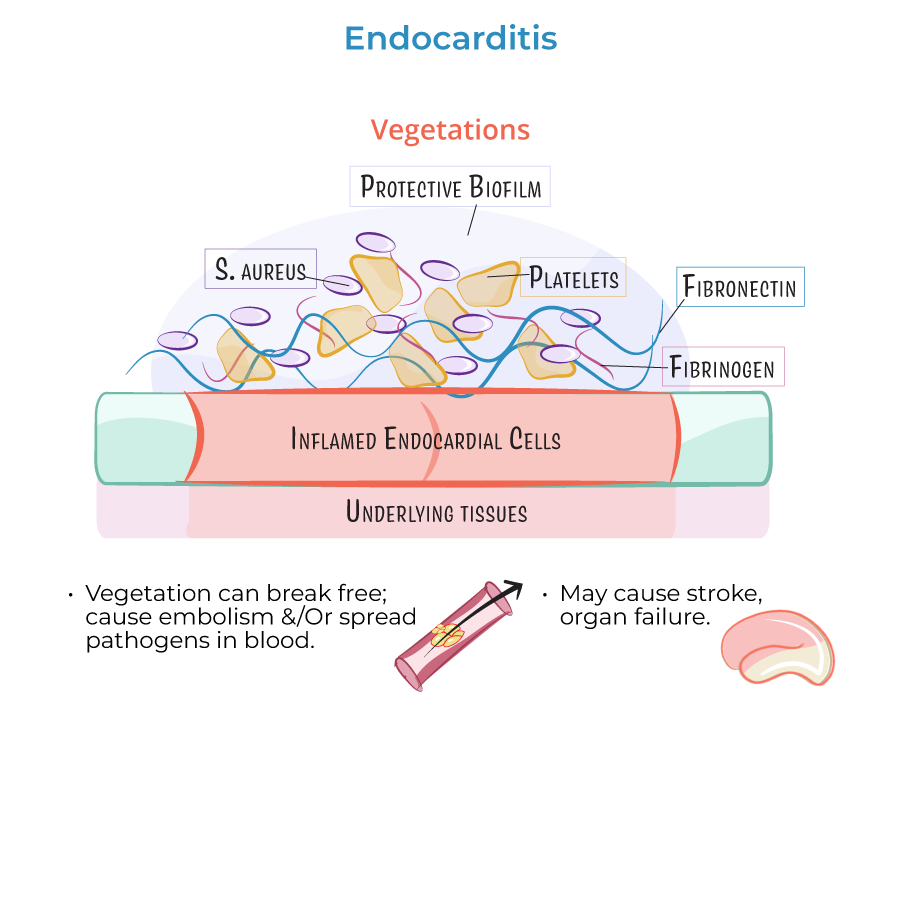
1. Vegetations can break free from valves and cause embolism, even stroke, requiring vigilant neurological assessments.
2. S. aureus can lie dormant as small colony variants, "hiding" from the immune system and antibiotics, necessitating complete treatment courses.
3. S. aureus produces a biofilm (slime layer) that inhibits thrombus destruction, requiring ongoing assessment for treatment effectiveness.
Patient Education
1. The aggressive nature of S. aureus necessitates patient understanding of treatment adherence importance.
2. Patients must recognize signs of embolic complications requiring immediate medical attention.
3. Education about prolonged IV therapy and potential need for home health services.
- --
HIGH YIELD
Nursing Assessment Priorities
1. Assessment for signs of inflammation affecting heart valves with vegetation blocking blood flow.
2. S. aureus releases toxins and acts as a superantigen to provoke immune responses, requiring assessment for systemic inflammatory response.
3. Monitor for signs of embolism if vegetation breaks free from the valve and travels in the bloodstream.
4. Assess for mural endocarditis, which affects the walls of the heart in addition to valvular involvement.
Nursing Interventions
1. Implementation of infection control measures, particularly important since S. aureus exists in normal flora.
2. Careful administration of IV antibiotics considering resistance patterns.
3. Monitoring for complications of prolonged IV therapy including line infections.
4. Cardiovascular assessment including heart sounds, vital signs, and signs of embolism.
Medication Considerations
1. S. aureus is resistant to penicillin, requiring knowledge of appropriate alternative antibiotics.
2. Methicillin-resistant strains (MRSA) display changes in penicillin-binding proteins, necessitating different antibiotic choices.
3. MRSA is increasingly common in both hospital and community settings, requiring nursing awareness of epidemiology.
4. Vancomycin administration requires monitoring of drug levels and kidney function.
Prioritization & Delegation
1. Recognition that S. aureus endocarditis has a particularly high mortality rate requiring priority care.
2. Delegation considerations for ongoing monitoring while maintaining RN oversight of assessment and IV therapy.
3. Priority teaching for high-risk patients with prosthetic devices or immunocompromise.
4. Prioritization of monitoring for embolic complications which can lead to stroke.
- --
Beyond the Tutorial
Additional Nursing Considerations
1. Use of cardiac monitoring for patients with endocarditis to detect arrhythmias related to myocardial inflammation.
2. Implementation of fall precautions for patients on prolonged bed rest or those with neurological symptoms from emboli.
3. Administration of antipyretics and comfort measures for symptomatic management of fever while obtaining cultures.
Psychosocial Considerations
1. Addressing anxiety and emotional responses to diagnosis of potentially life-threatening infection.
2. Facilitating coping strategies for patients facing prolonged hospitalization and IV therapy.
3. Discharge planning and coordination of home health services for continued antibiotic therapy.
Advanced Nursing Care
1. Management of central venous access devices to maintain long-term access for antibiotic administration.
2. Preparation of patients for potential surgical interventions including valve replacement.
3. Coordination of multidisciplinary care involving infectious disease specialists, cardiologists, and cardiac surgeons.