
NCLEX - Abdominal Pain
Start your One-Week Free Trial
Already subscribed? Log in »
Here are key facts for NCLEX from the Abdominal Pain tutorial, as well as points of interest at the end of this document that are not directly addressed in this tutorial but should help you prepare for the boards. See the tutorial notes for further details and relevant links.
 Below is information not explicitly contained within the tutorial but important for NCLEX.
- --
VITAL FOR NCLEX
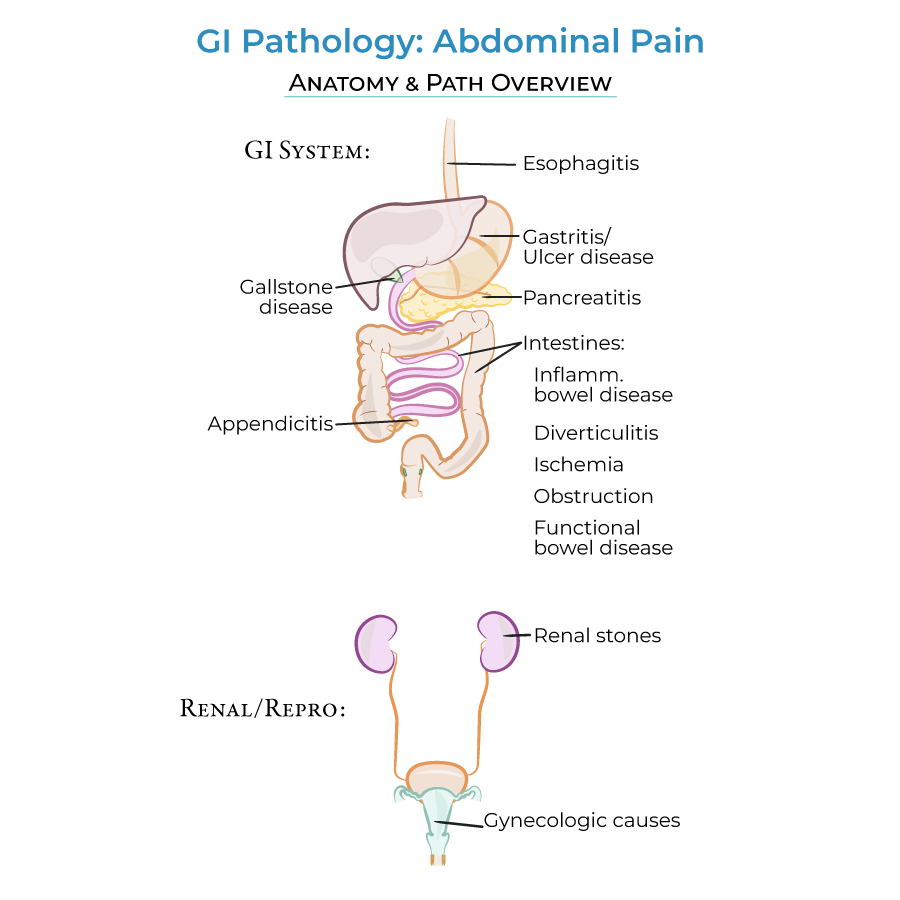
Assessment of Abdominal Pain Causes
1. Esophagitis: Inflammation of the esophagus is most often caused by acid reflux, medications, and eosinophilic esophagitis.
2. Gastritis and Peptic Ulcers: Caused by H. pylori infection, drugs, stress, and, in the case of gastritis, autoimmune dysfunction.
3. Intestinal Obstruction: Caused by hernias, adhesions, volvulus, tumors, inflammatory narrowing, foreign bodies, and fecal impaction.
4. Diverticulitis: Inflammation (often with bacterial infection) in diverticula, which are pouch-like outcroppings of the intestinal wall.
5. Intestinal Ischemia: Result of systemic hypotension, atherosclerosis, blood clots, and constricting fibrosis or strictures that inhibit blood flow.
6. Inflammatory Bowel Disease: Comprises the chronic/remitting autoimmune disorders Crohn's disease and ulcerative colitis.
7. Functional Bowel Disorders: Characterized by disordered brain-gut interactions. The most common FBD is Irritable bowel syndrome.
Location-Based Assessment
1. Pancreatitis: Causes epigastric pain that radiates towards the back.
2. Gallstone Disease: Causes pain in the right upper abdominal quadrant as gallstones get stuck in the biliary system.
3. Appendicitis: Often presents early on with pain in the peri-navel area that later moves to the right lower abdominal quadrant.
4. Kidney Stones: Cause "flank" pain – pain in the side of the torso; pain can travel to the groin area.
5. Gynecological Causes: Include ruptured ovarian cysts, pelvic inflammatory disease, ectopic pregnancy, and endometriosis.
- --
HIGH YIELD
Nursing Interventions and Treatments
1. Esophagitis: Treatments include proton pump inhibitors to reduce acid production by the stomach.
2. Gastritis and Peptic Ulcers: Treatments include proton pump inhibitors, antacids, H2 blockers, and prostaglandins.
3. Intestinal Ischemia: More common in the intestines than in the stomach or esophagus. Surgery and/or medications to restore blood flow are prescribed.
4. Inflammatory Bowel Disease: Patients often experience diarrhea in addition to abdominal cramping. In ulcerative colitis, the diarrhea is frequently bloody. Anti-inflammatories and immune suppressors are often prescribed.
5. Functional Bowel Disorders: Etiologies are uncertain, but are thought to include infection and/or psychosocial causes.
Assessment Findings
1. Pancreatitis: Early/acute pancreatitis is characterized by elevated serum amylase and lipase levels. Late/chronic pancreatitis can result in loss of endocrine and exocrine functions (i.e., patients have diabetes mellitus).
2. Appendicitis: Characteristic migration of pain from peri-navel area to right lower quadrant is a key diagnostic finding.
3. Diverticulitis: Presents with left lower quadrant pain, fever, and changes in bowel habits.
4. Intestinal Obstruction: Scar tissue adhesions that form after abdominal surgery bind and restrict the intestinal tract, which obscures movement of materials.
- --
Beyond the Tutorial
Nursing Process for Abdominal Pain
1. Assessment: Focused physical assessment techniques for abdominal pain including inspection, auscultation, percussion, and palpation in correct sequence.
2. Nursing Diagnoses: Common NANDA diagnoses associated with various abdominal conditions.
3. Planning: Priority setting for patients with different types of abdominal pain.
4. Implementation: Patient positioning, comfort measures, and monitoring parameters.
5. Evaluation: Expected outcomes for successful interventions.
Patient Education
1. Medication Teaching: Side effects and administration guidance for common GI medications.
2. Diet Modifications: Appropriate nutritional approaches for specific conditions.
3. Warning Signs: When to seek immediate medical attention for worsening symptoms.
4. Lifestyle Changes: Preventive measures to reduce recurrence of conditions.
5. Self-Care Strategies: Home management techniques for chronic conditions.
Special Considerations
1. Pediatric Patients: Age-specific assessment differences and common conditions.
2. Geriatric Patients: Atypical presentations and risk for complications.
3. Pregnant Patients: Safe assessment and intervention approaches.
4. Cultural Considerations: Pain expression variations and communication strategies.
5. Psychosocial Support: Addressing anxiety and stress related to acute and chronic abdominal conditions.