
COPD for ABIM
Start your One-Week Free Trial
Already subscribed? Log in »
Chronic obstructive pulmonary disease for the American Board of Internal Medicine Exam
Pathophysiology
- Chronic Inflammation:
- Chronic obstructive pulmonary disease (COPD) involves persistent inflammation of the airways, lung parenchyma, and vasculature.
- Inhaled irritants (e.g., cigarette smoke, pollutants) cause damage to airway structures, leading to an exaggerated inflammatory response.
- Neutrophils, macrophages, and CD8+ T cells are the predominant cells involved in COPD-related inflammation.
- Airflow Limitation:
- COPD is characterized by progressive airflow obstruction due to:
- Small airway disease (bronchiolitis): Narrowing and obliteration of the small airways caused by inflammation, fibrosis, and increased mucus production.
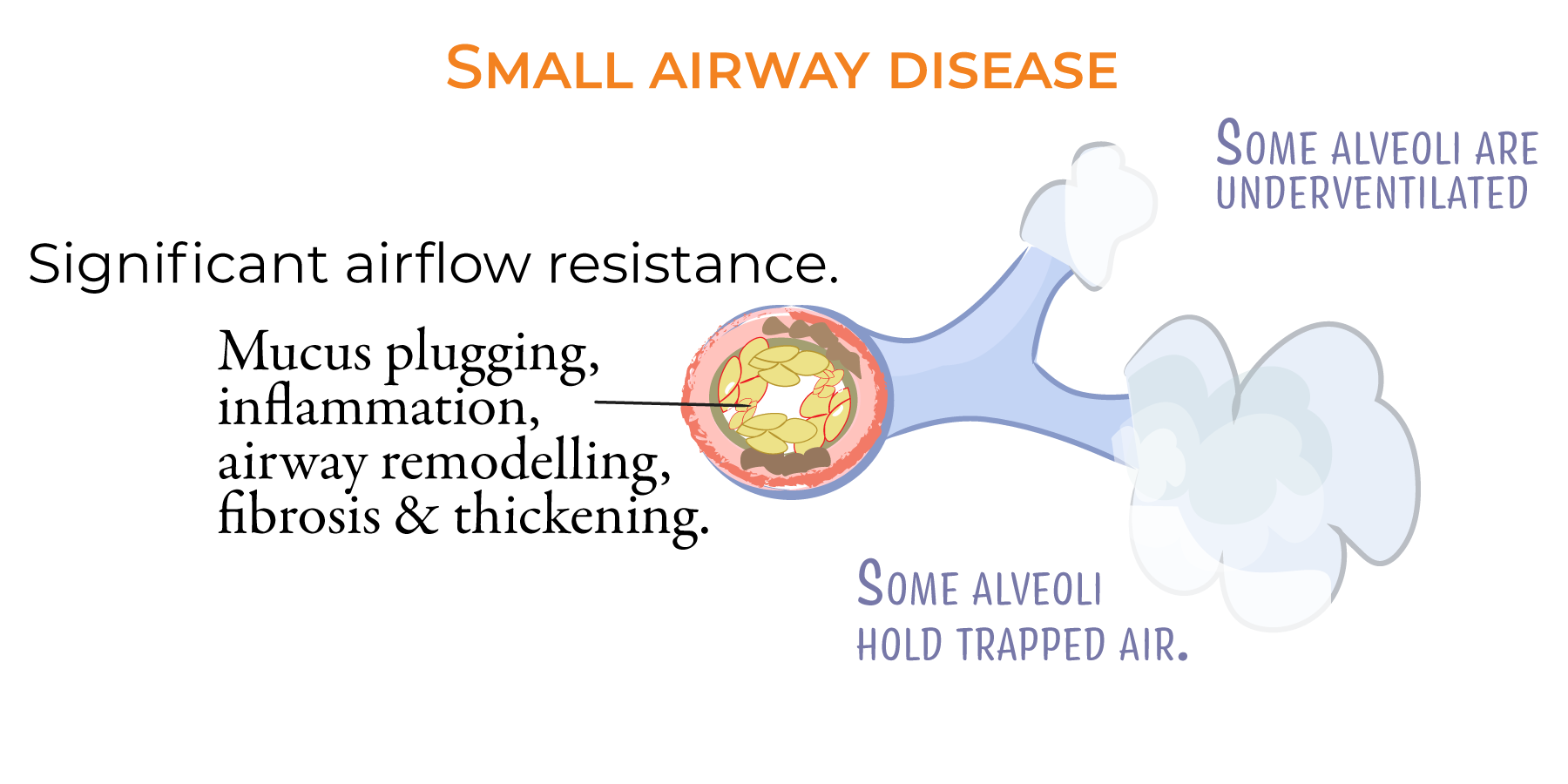
- Parenchymal destruction: Emphysema leads to the loss of elastic recoil, resulting in reduced ability to keep airways open during expiration.
- Imbalance of Protease-Antiprotease Activity:
- In COPD, there is an increase in protease activity (e.g., neutrophil elastase) and a decrease in antiprotease activity (e.g., alpha-1 antitrypsin).
- This imbalance contributes to alveolar destruction and emphysema development.
- Oxidative Stress:
- Oxidants from cigarette smoke and the inflammatory cells in COPD contribute to further lung damage, inactivation of antiproteases, and inflammation amplification.
Risk Factors
- Cigarette Smoking:
- The primary risk factor for COPD, responsible for 85-90% of cases.
- The risk increases with pack-years of smoking, but even light smokers can develop COPD.
- Environmental/Occupational Exposure:
- Chronic exposure to biomass fuels, air pollution, and occupational dusts and chemicals increases the risk of developing COPD.
- Genetics:
- Alpha-1 antitrypsin deficiency is a genetic risk factor for COPD, especially for early-onset emphysema.
- Aging:
- The lungs undergo structural changes with age, and older adults are more susceptible to COPD.
Clinical Features
- Chronic Cough and Sputum Production:
- Often the earliest symptom, cough may be intermittent or persistent. It is usually accompanied by mucous sputum production.
- Dyspnea:
- Progressive shortness of breath, especially during exertion, is a hallmark symptom. It is typically the reason patients seek medical care.
- Wheezing and Chest Tightness:
- These symptoms are common, especially during exacerbations, and are often mistaken for asthma.
- Frequent Respiratory Infections:
- Patients with COPD are more susceptible to respiratory infections, which can lead to exacerbations.
Diagnosis
- Spirometry:
- Spirometry is essential for diagnosing COPD and assessing its severity. Key parameters include:
- Forced Expiratory Volume in 1 Second (FEV1): Decreased in COPD.
- Forced Vital Capacity (FVC): May also be reduced, but to a lesser extent than FEV1.
- FEV1/FVC Ratio: A post-bronchodilator ratio <0.70 confirms persistent airflow limitation and the diagnosis of COPD.
- Assessment of Severity:
- The severity of COPD is classified based on FEV1:
- Mild (GOLD 1): FEV1 ≥80% predicted.
- Moderate (GOLD 2): FEV1 50-79% predicted.
- Severe (GOLD 3): FEV1 30-49% predicted.
- Very Severe (GOLD 4): FEV1 <30% predicted.
Management
- Smoking Cessation:
- The most critical intervention to slow disease progression. Pharmacologic aids (nicotine replacement, varenicline, bupropion) and counseling significantly improve quit rates.
- Bronchodilators:
- Mainstay of COPD therapy, used to relieve symptoms and reduce exacerbations.
- Short-acting bronchodilators (SABAs): e.g., albuterol, used as needed for relief of symptoms.
- Long-acting bronchodilators (LABAs and LAMAs): e.g., salmeterol (LABA), tiotropium (LAMA), used for maintenance therapy in moderate-to-severe COPD.
- Combination bronchodilators: LABA/LAMA combinations are superior to monotherapy in improving lung function and reducing exacerbations.
- Inhaled Corticosteroids (ICS):
- Used in combination with bronchodilators (LABA/ICS) in patients with severe COPD or frequent exacerbations.
- ICS are associated with a reduced risk of exacerbations but carry an increased risk of pneumonia.
- Phosphodiesterase-4 (PDE-4) Inhibitors:
- Roflumilast can be added in severe COPD with chronic bronchitis and frequent exacerbations, as it reduces inflammation and exacerbation frequency.
- Oxygen Therapy:
- Long-term oxygen therapy improves survival in patients with chronic respiratory failure and severe resting hypoxemia (PaO2 ≤55 mmHg or SpO2 ≤88%).
- Pulmonary Rehabilitation:
- Improves exercise tolerance, dyspnea, and quality of life in all patients with COPD, especially those with moderate-to-severe disease.
- Vaccinations:
- Annual influenza vaccination and pneumococcal vaccination (PPSV23, PCV13) are recommended to reduce the risk of respiratory infections and exacerbations.
Exacerbations
- Definition:
- Acute worsening of respiratory symptoms (dyspnea, cough, sputum production) beyond normal day-to-day variations, requiring a change in treatment.
- Causes:
- Most exacerbations are triggered by respiratory infections (viral or bacterial). Environmental pollutants may also contribute.
- Management of Exacerbations:
- Bronchodilators: SABAs (with or without short-acting anticholinergics) are first-line treatments for exacerbations.
- Corticosteroids: Oral prednisone (40 mg daily for 5 days) is commonly used to shorten recovery time and improve lung function.
- Antibiotics: Indicated if increased sputum purulence is present, or if mechanical ventilation is required.
- Oxygen Therapy: Target SpO2 is 88-92% to prevent hypoxia while avoiding hypercapnia in patients with severe COPD.
Complications
- Cor Pulmonale:
- COPD can lead to pulmonary hypertension and right heart failure (cor pulmonale), characterized by peripheral edema, jugular venous distension, and hepatomegaly.
- Acute Respiratory Failure:
- Severe exacerbations can lead to acute respiratory failure, requiring mechanical ventilation or non-invasive positive pressure ventilation (NIPPV).
Key Points
- COPD is characterized by persistent airflow limitation due to chronic inflammation, airway obstruction, and parenchymal destruction.
- Cigarette smoking is the leading risk factor for COPD, though environmental exposures and genetics (e.g., alpha-1 antitrypsin deficiency) also play a role.
- Diagnosis is confirmed by spirometry, showing a post-bronchodilator FEV1/FVC ratio <0.70.
- Management includes smoking cessation, bronchodilators, inhaled corticosteroids, pulmonary rehabilitation, and vaccinations.
- Exacerbations are treated with bronchodilators, corticosteroids, and antibiotics when indicated. Oxygen therapy is used to manage hypoxemia.
- Complications include cor pulmonale and acute respiratory failure, which may necessitate advanced interventions.